You can do a surprising amount of this for nothing. Not everything, and not the tedious part, but enough to know whether you have a real problem before you agree to pay anyone monthly for the rest of your life.
Six tools here are genuinely free, meaning a permanent plan rather than a trial that bills you in fourteen days. Our main guide covers the paid options. This page is what you can do first, and what free honestly cannot do.
New Life Reputation runs this site and sells none of these. We would rather you spent nothing and found out the problem was small.
Start with the scan, because most people are wrong about their own situation
Two outcomes are common and they lead to opposite decisions.
Most people find their exposure is broker listings: address, phone number, age, relatives, spread across sites nobody has heard of. Unpleasant, entirely normal, and fixable for twenty dollars a year.
A smaller number find something else, an article, a court record, an old profile, and no subscription in the world addresses those. Knowing which of the two you have costs nothing and changes everything about what you should buy.
The six
| Tool | What the free tier does | What it will not do |
|---|---|---|
 BrandYourself BrandYourself |
Scans your name, lists issues found | Fix them for you |
 Atlas Privacy Atlas Privacy |
Exposure scan plus 50 plus opt-out guides | Submit the opt-outs |
 Kanary Kanary |
Free tier scan and monitoring | Full removal coverage |
 Mozilla Monitor Mozilla Monitor |
Breach alerts, ongoing | Remove anything at all |
 Optery Optery |
Free scan showing where you appear | Remove without a paid plan |
 Privacy Bee Privacy Bee |
Free scan, no card required | Remove without a paid plan |
Atlas Privacy
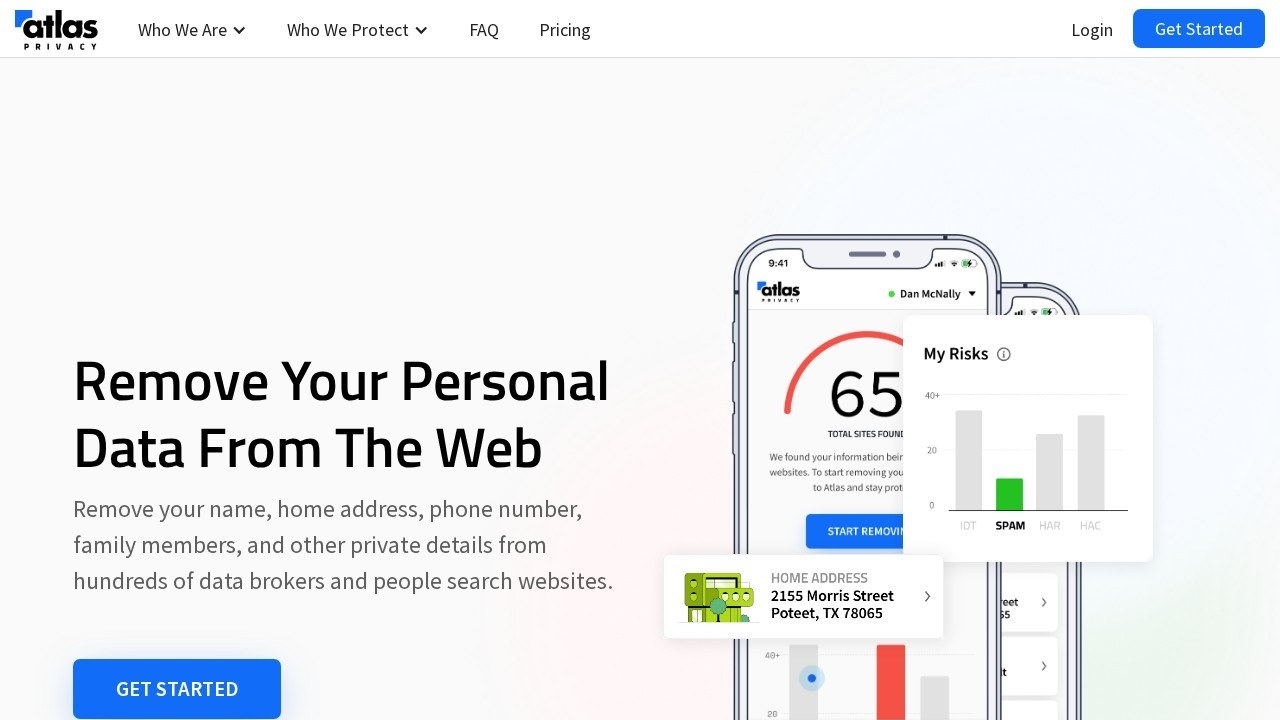
The most useful free thing on this page, and it is not close. The free plan includes an exposure scan and more than 50 step by step guides for opting out of broker sites yourself.
Those guides are the whole paid product of several competitors, written down. Working through them takes an afternoon and removes real listings permanently, and you will understand your own exposure far better afterwards than any dashboard would have told you.
Founded 2021, Y Combinator backed, with paid plans around 9 dollars a month covering 150 plus brokers on weekly re-scans if you decide you would rather not do it by hand. Their well known New Jersey litigation is on behalf of assigned public officials and does nothing for ordinary subscribers.
BrandYourself
A free forever tier, not a trial. It scans what appears for your name and returns a list of issues, which is the diagnostic step this whole page is arguing for. Founded 2010 in New York under HelloPrivacy LLC.
Ten minutes, and you convert a vague anxiety into a specific list you can work down. Paid DIY plans start around 29 dollars a month and managed tiers are quoted, but the free scan is worth running even if you intend to buy something else entirely.
Mozilla Monitor
Free breach monitoring from the nonprofit behind Firefox, checking known breaches for exposed emails, passwords, card numbers and bank details, with ongoing alerts. Roughly 10 million users across 237 countries.
It covers the one layer none of the paid removal tools touch. Data brokers are a supply problem; breaches are a different supply problem, and knowing your credentials appeared in one is how you stop the next account takeover. It removes nothing and never will.
One correction, because older reviews still get this wrong: the paid Monitor Plus tier that removed broker data was discontinued in December 2025. What remains is alerts.
Kanary
A genuine free tier alongside paid plans from 9.99 dollars a month. Founded 2020 in Chicago, backed by Y Combinator and Mozilla’s accelerator. Useful as a second opinion: different tools find different listings, and running two free scans gives you a fuller picture than trusting one. Youngest company here, and it does not publish a broker count.
Optery
The free scan shows you where you appear, with no card required. Paid plans start at 3.99 dollars a month and add before and after screenshot proof of every removal, which is the strongest evidence practice in the category.
Run the scan for free, and if you decide to pay, this is the one that shows its work.
Privacy Bee
Free scan, no credit card. Paid entry from 8 dollars a month claiming up to 1,121 brokers on higher tiers. Users often report a real drop in spam calls after subscribing, which is the most tangible signal available that any of this works.
Two things to know before upgrading: independent testers found actual removals well short of the advertised count after months, and multiple reviewers describe cancellation as difficult.
What free genuinely cannot do
Be clear-eyed about this, because the limits are real.
Free will not keep working. Every scan above is a snapshot, and brokers relist continuously from public records and commercial data. Doing this by hand means repeating it quarterly, forever, and most people stop after the second round.
Free will not reach the awkward sites. A meaningful share of brokers require manual intervention, identity verification or postal contact, and the guides get you most of the way rather than all of it.
And free does nothing at all about an article, a court record, a review or an empty first page. Those are different problems with different solutions, and no amount of opt-out work touches them.
A free afternoon that beats most paid plans
- Run the BrandYourself scan and the Atlas exposure check. Write down everything.
- Sign up for Mozilla Monitor and leave it running.
- Work through the Atlas opt-out guides, starting with the sites that appeared highest in your own name search.
- Set a calendar reminder for three months to check whether anything returned.
If the reminder fires and the listings are back, that is the moment to buy a subscription, and you will know exactly what you are buying. If your scan turned up an article or a record instead, the guides explain why a subscription will not help, and a free look at your name will tell you what would.
Last updated on July 29, 2026